A natural Catuai from Felipe Contreras at Finca Gascon in Antigua, fermented in GrainPro bags before drying. Raspberry, cognac, and a smooth finish bring vivid red fruit and subtle boozy sweetness.
Coffee Origin
Compare 24 current Guatemala specialty coffees from independent UK roasters by process, tasting notes and price.
Sorted with featured coffees first.
Showing 24 of 24 coffees

A natural Catuai from Felipe Contreras at Finca Gascon in Antigua, fermented in GrainPro bags before drying. Raspberry, cognac, and a smooth finish bring vivid red fruit and subtle boozy sweetness.

Guatemala — Santa Irene Catuaí Catuaí is a cornerstone varietal of contemporary coffee production, prized for its resilience as much as its quality. While often associated with dependable everyday coffees, lots like this show just how expressive the variety can be when grown in exceptional conditions. A classic washed process brings clarity and structure to the cup, revealing vibrant citrus, rounded sweetness and a lingering, syrupy finish.

A natural Gesha from Santa Irene in Coban, shaped by the region with constant mist, rainfall, and slow cherry development. Pomegranate, jasmine, and a tea-like finish make it bright, floral, and composed.

Guatemala — Santa Irene Sidra Originally derived from Bourbon, Sidra has fast become one of the world's most sought-after coffee varieties, prized for its vibrant fruit character and remarkable complexity. Here, a traditional washed process allows those qualities to shine, producing a cup with exceptional clarity and a mouthwatering finish, where bright tropical fruits are balanced by delicate floral notes.

A washed Guatemalan coffee from Maria Ramirez Vargas at Tzun-Witz in Huehuetenango, bringing red berry, floral, and nectarine notes.

We've been sourcing this standout Huehuetenango coffee since 2016—a vibrant, fruity Guatemalan that breaks all the usual rules.

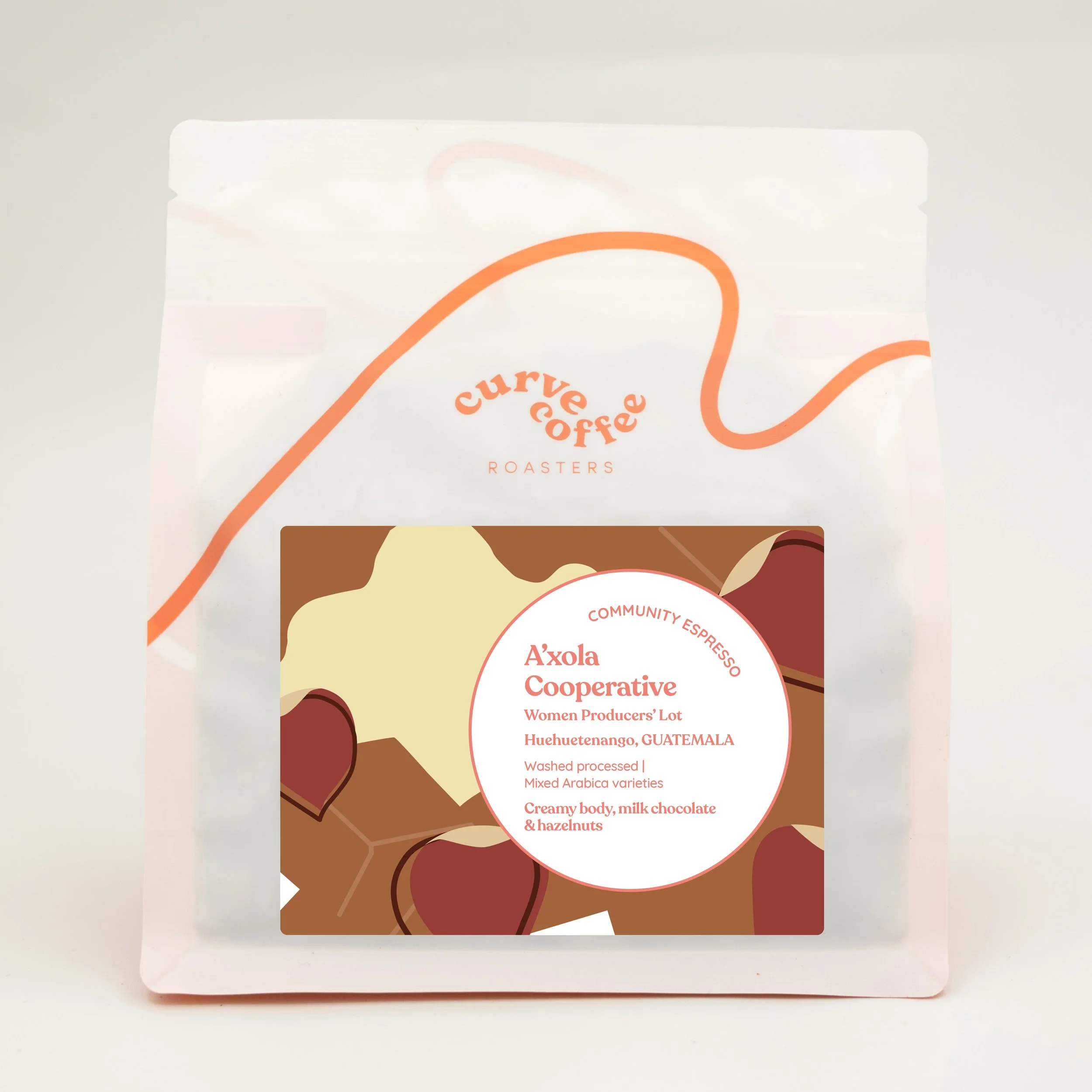
Our seasonal, all rounder espresso. Our community espresso changes three time a year, sourced from the same communities year after year. This one is a washed processed lot of field Arabica varieties produced by members of the A’xola Cooperative based in Guatemala’s Huehuetenango region. Creamy body, milk chocolate & hazelnuts Great for espresso machines, mocha pots (stove-tops), Aeropress & cafetière. Delicious on its own and with milk.

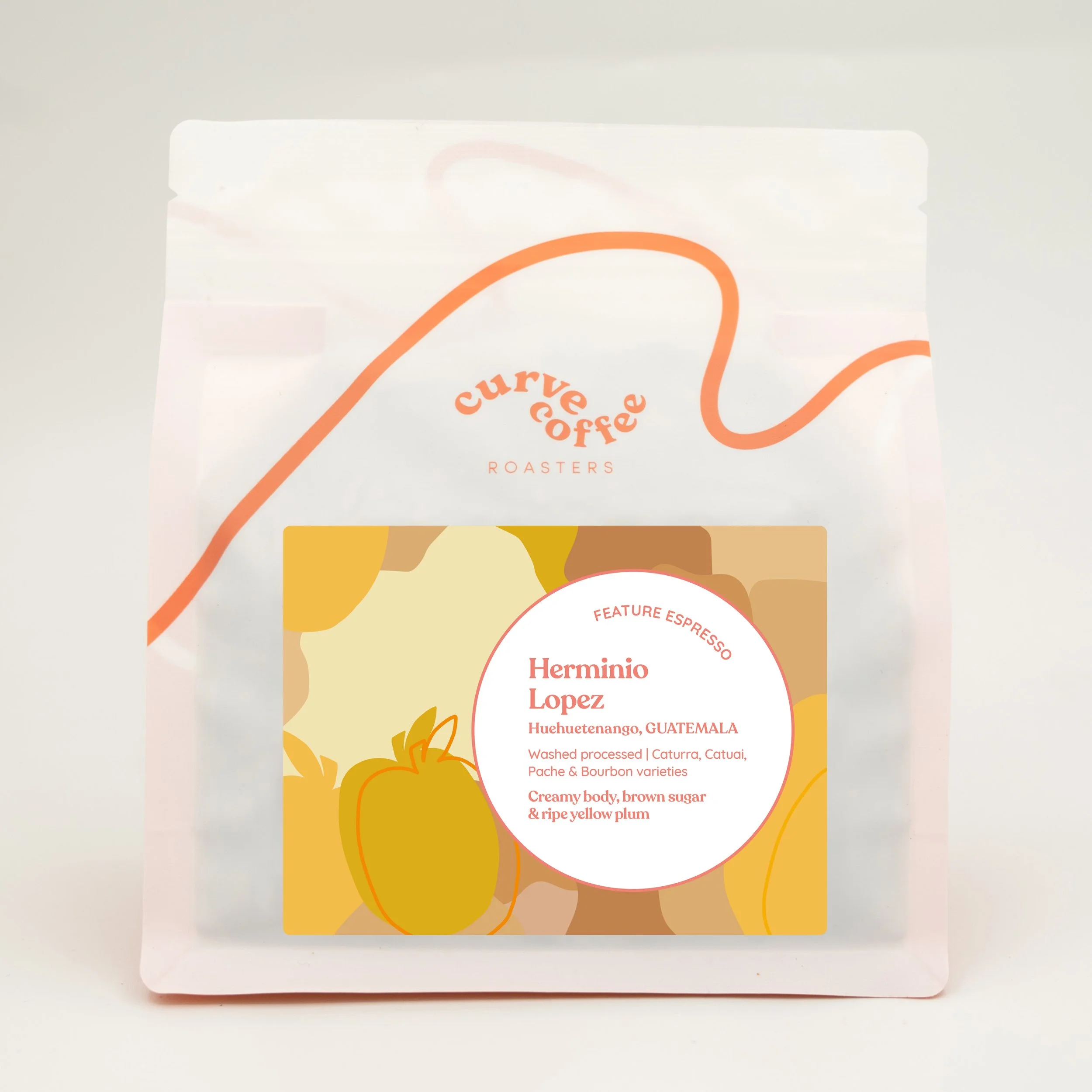
Washed processed lot of Bourbon, Caturra & Pache varieties produced by Herminio Lopez at his El Carpintero in Guatemala’s Huehuetenango region. Creamy body, brown sugar & yellow plum Great for espresso machines, mocha pots (stove-tops), Aeropress & cafetière. Delicious on its own and with milk.

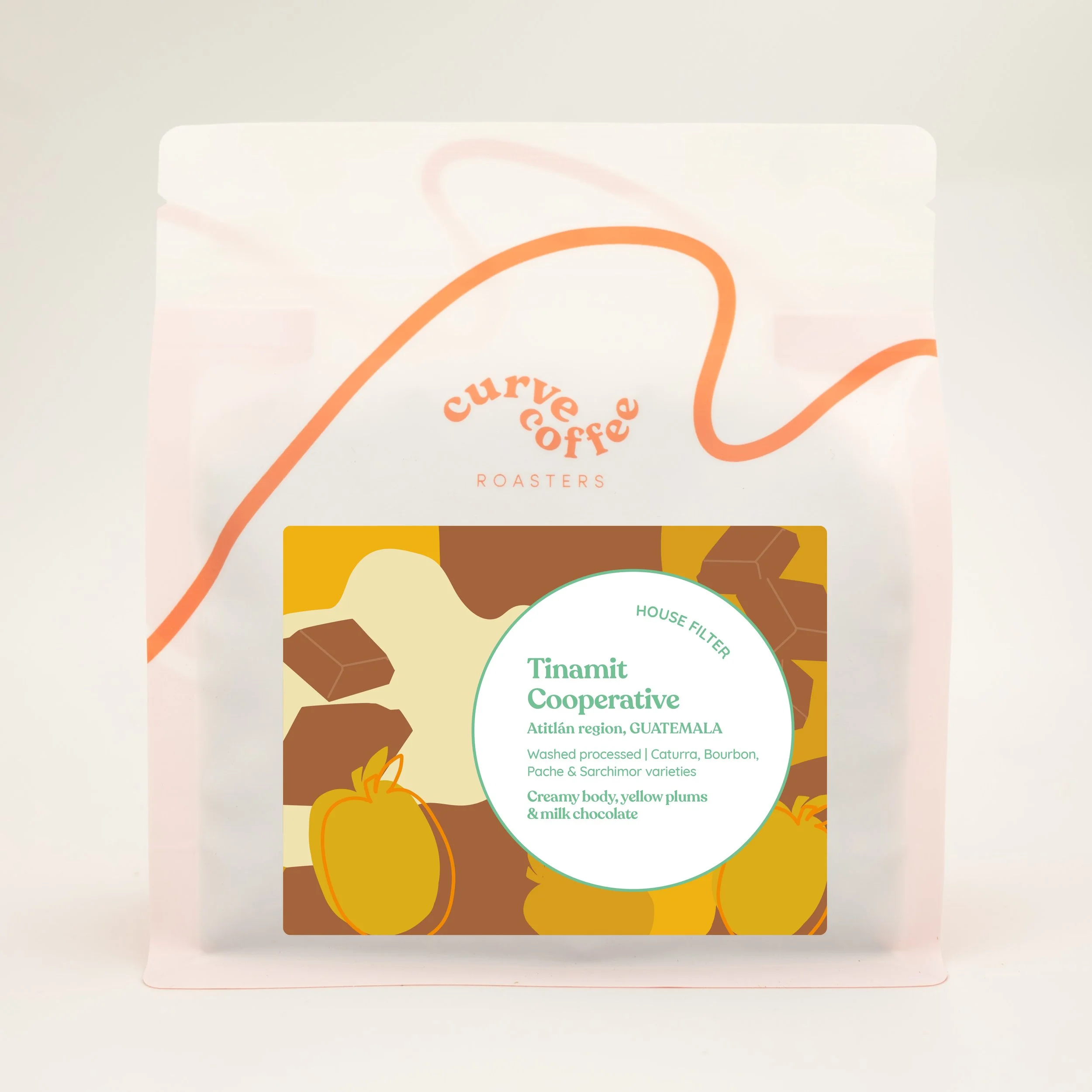
Easy going, sweet filter with mellow adicity, selected and roasted for everyday sipping. A classic washed processed lot of field blend arabica varieties produced by the Tinamit Cooperative in Guatemala's Atitlan region. Creamy mouthfeel, yellow plum & milk chocolate Great for filter coffee brewing (V60 and other drip filter methods, Aeropress, Clever Dripper and cafetière). Great on its own as well as with a drop of milk. -

A washed Guatemalan coffee from Finca Filadelfia in Antigua, one of the region's historic farms. Volcanic soils, shade growing, and careful production shape a balanced, complex cup.

ALTITUDE : 1,700 MASL VARIETAL : Pacamara PROCESS : Washed REGION: Chimaltenango, Antigua FARMER: Antonio Medina Antonio inherited his farm from his father, who divided the land into smaller plots among his children. Initially growing corn and beans, Antonio had long dreamed of producing coffee, having worked on neighbouring coffee farms from a young age to learn the craft. In 1991, he planted his first coffee tree and, over the following 25 years, steadily expanded the farm, turning that early ambition into a livelihood built through patience and perseverance. This particular lot reflects Antonio's commitment to quality. He chose to plant this celebrated variety despite the additional care and attention it requires, with cherries carefully picked at peak ripeness and transported to the wet mill the same day. After depulping, the coffee undergoes a long, slow 32-hour dry fermentation before being thoroughly washed. The coffee is then dried on the patio for around 10 days, with the parchment turned frequently to ensure an even and consistent drying process. The result is a coffee shaped by experience, persistence and more than three decades of careful cultivation, from Antonio's first trees to this exceptional lot.

Producer Eddy Macdonald Lopez Lopez Farm/Mill Finca Las Gardenias Location Pianche, Malacatancito, Huehuetenango, Guatemala Altitude 1,900 masl Process Natural Cultivar Bourbon Harvest March 2026 Expect notes of Strawberry, Raspberry, Red Grape Finca Las Gardenias sits high in the mountains of Huehuetenango, Guatemala, at 1,900 metres above sea level. The 15.3-hectare farm is run by Eddy Macdonald Lopez Lopez, and preserving the natural environment is central to how he operates. Native trees, spring-water sources and native wildlife, including the Quetzal that is Guatemala's national bird, all share the land with the coffee. The estate is Rainforest Alliance certified. Eddy's Bourbon cherries are harvested at peak maturity and dried whole cherry in two stages: five days on the patio under managed sun, then a further seventeen days on African-style raised beds, hand-turned every hour. The natural processing draws out the variety's deepest fruit character, producing a cup that punches well above the classical Guatemalan profile: Strawberry, raspberry and red grape, layered and bright.
A washed coffee from Finca La Bolsa in Guatemala, balancing green apple, red berries, and sugared almond sweetness.
VERY LIMITED EDITION - Roasted: 14th September We’re thrilled to present our roasts of this exciting collaboration between James Hoffmann and Lucia Solis that explores how fermentation can shape what we taste in the cup. Starting with the same coffee grown at Finca San Miguel Urias in Antigua, Guatemala, four different processes have been implemented to isolate the impact of fermentation. Tasted side by side, the four coffees offer a rare opportunity to explore different fermentation styles and understand the role microbes and controlled fermentation play in shaping how a coffee expresses itself. The project will culminate in a live tasting on 3rd October, bringing everyone together to taste the four coffees at the same time. We’re really excited to share this experience with you. More information available on the official site here.

Finca Santa Elisa is located near the town of San Pedro Yepocapa in Guatemala’s Acatenango region. Rich volcanic soils, cool temperatures and cloud forests create ideal conditions for growing high-quality speciality coffee. This coffee from Santa Elisa is a beautifully balanced classic. We’ve roasted it to bring out its natural sweetness, fresh fruit notes and delicate honeyed florals. As the sugars caramelise during roasting, rich milk chocolate flavours develop, creating a smooth, versatile and seriously easy-drinking brew.

A Guatemalan sugarcane decaf sourced through Coffee Bird from farms around Atitlan. Muscovado sugar, baked plum, and hazelnut notes make it sweet, complex, and comfortably full-bodied.

We absolutely love having naturally processed Guatemalan coffees on offer, as they often feature unbelievable body and chocolate notes supporting the classic fruity profile of a natural. Our good friends at Primavera Coffee brought this lot in, and Fredy nailed the processing on it ... It tastes of pineapple, chocolate truffle, and cranberry, and has sweet, syrupy body for days. It won't hang around long, so get it while you can! This is definitely our daily drinker in the roastery (while it lasts). Fredy Orantes (pictured above, left) is a leader among the coffee growers of Santa Rosa, Guatemala, and has worked tirelessly to maintain high standards both in the field and during harvest to produce the best possible coffees. He is an expert with both larger lots and small microlots, and every aspect of coffee picking and processing is done with care to ensure top quality. Fredy actively cares for the variety of trees on his farm – grevillea and cuje are the most numerous — but he also maintains other types of fruit and native trees. The soil management includes the application of compost made from fallen leaves and branches as well as coffee pulp. A variety of native animals and birds visit the farm, which Fredy has kept unfenced; as in nature, these creatures can come and go as they please. Fredy’s coffees are processed with utmost care and attention at his mill, which at 1650 meters above sea level is slightly lower than the farm where the plants grow. This year, with the weather a little cooler than usual, his expertise in properly processing lots was even more critical than usual. Only the ripest Catuai cherries were selected for this lot, and they were soaked in water to remove any dust or floaters (immature or malformed beans) after picking. Soaking the cherries also serves to lower the microbial count and homogenise the temperature of the cherries. They were then placed on raised beds to dry and turned frequently in order to ensure thorough and even drying. Fredy laid the coffee out at 10 am and collected it each afternoon at 2 pm to ensure that it dried during the warmest parts of the day. Milling the dried pods was the final step, which happened at the Arcoiris dry mill in Fraijanes under the watchful eye of their experienced mill team. Then, the coffee was sorted, bagged, and prepared for export. Elevation: 1870 Meters Above Sea Level Varietal: Catuai Cup Score: 87.5 Price paid per kilo: £13.15 Process: Natural

Half Caff blends 50% El Pato Decaf with 50% Nafuna from Uganda for a lighter-caffeine filter coffee. Clean, juicy structure meets berry fruit and milk chocolate notes.

Rich and chocolatey, we welcome back Los Arcos to our lineup! Produced by third-generation coffee farmer Osmin Garcia in the Jalapa region of Guatemala, your mornings just got brighter!

Farm - Finca Gascon Origin - Guatemala Process - Black Honey Varietal - Caturra Altitude - 1500-1700 MASL Flavour Notes - Raisin, Apple, Chocolate Best for: Filter + Espresso roast level: Very Light FARM Gildardo Contreras developed an interest in coffee production from an early age, helping his parents harvest and process coffee from approximately 50 Bourbon coffee trees growing in their family garden. This early experience inspired his passion for coffee cultivation and led him to establish his own farm in 2012 after purchasing a property from a relative that produced both avocados and coffee. Over time, Gildardo expanded the farm by acquiring neighbouring parcels, increasing its size to approximately 54 acres. Today, the farm is managed by his son, Felipe Contreras, who focuses on improving coffee quality and refining processing methods. Felipe also works closely with neighbouring producers to share knowledge and encourage higher production standards across the local community. The farm places a strong emphasis on sustainable practices, using natural pest management methods, including a homemade mixture of garlic, chilli, onion, and water to control fumagina (sooty mould). To maintain productivity, around 20% of the coffee parcels are renovated each year, with Bourbon trees gradually being replaced by the SL28 variety, supported by an irrigation system. PROCESS Before harvesting, coffee cherries are carefully assessed through Brix level measurements to identify the ideal parcels and cherries for picking, with target readings ranging between 18–23 degrees. At the end of each day, the harvested coffee is sorted, weighed, and transported to the wet mill, where it undergoes a 48-hour whole cherry fermentation before being depulped and prepared for drying. The coffee is then dried on raised beds under controlled conditions, with parchment removed once the beans reach the ideal moisture content for stable storage. Although the farm has access to Guardiola dryers, they have not been required to date.

Farm - Santa Irene Origin - Guatemala Process - Natural Varietal - Geisha Altitude - 1470 - 2100 MASL Flavour Notes - raspberry, prune, apple Best for: Filter + Espresso roast level: Very Light FARM The Cobán region of Guatemala is known for its unique climate, which differs from other coffee-growing regions in the country. Instead of distinct dry and rainy seasons, Cobán experiences frequent mist and rainfall, known locally as chipi-chipi, for up to ten months each year. This cool, humid climate, influenced by the Atlantic Ocean, creates ideal conditions for producing high-quality shade-grown coffee, while also requiring careful management to reduce the risk of coffee leaf rust. One notable producer is Saint Irene, a 129-hectare protected natural forest reserve owned by Dr. Jacinto Estrada Zanabria. In 2012, his son, Carlos Estrada, began cultivating 15 hectares of the property with coffee varieties including Catuaí, Geisha, Bourbon, and Cidra, with Catuaí being the primary variety. Carlos is dedicated to specialty coffee production and continuously experiments with innovative processing methods, including anaerobic fermentation. His investment in greenhouse drying systems reflects his commitment to improving coffee quality and advancing sustainable production practices. PROCESS Before harvesting, the coffee cherries are assessed using Brix measurements to determine their sugar content and identify which lots are ready for picking. Cherries are typically harvested when they reach a Brix level of 18–22°. At the end of each day, the harvested coffee is sorted, weighed, and transported to the wet mill for processing. Geisha coffee undergoes flotation before being slowly dried on raised beds inside a greenhouse. Due to Cobán's consistently wet climate, greenhouse conditions are carefully managed to control temperature and humidity, ensuring even drying. Once the parchment coffee reaches its optimal moisture content, it is prepared for safe storage.

She is back for another year and she is better than ever. Peaches in syrup, jammy strawberry and a hint of jasmine, the ultimate expression of what to expect from Catarina Mendez.

Osmin’s coffee was a favourite among the roastery team last year, it had that rare quality in a washed coffee which made it sparkle in the cup. Naturally we are ecstatic to see its return, this year with a more elegant profile, but still that familiar sparkle we have come to love so much.

It was during our trip to Guatemala in 2024 that we fortuitously met the Tinamit co-op at the Primavera dry mill, we fell in love with the producers of the group and their excellent coffees. This year the washed lot returns to us in the Trust range, where our buying is coordinated with our impact program in coffee producing regions.
These links switch to another browse view. The matching coffees for this page are shown above.