A semi-washed honey lot from Benancio Chavez at Finca Santa Elena in Chiapas. Marzipan, brown sugar, and a smooth texture come through from careful resting, pulping, and solar drying.
Coffee Origin
Compare 18 current Mexico specialty coffees from independent UK roasters by process, tasting notes and price.
Sorted with featured coffees first.
Showing 18 of 18 coffees

A semi-washed honey lot from Benancio Chavez at Finca Santa Elena in Chiapas. Marzipan, brown sugar, and a smooth texture come through from careful resting, pulping, and solar drying.

A natural Mexican lot from SIPRO smallholders in Chiapas, built from Caturra and Mundo Novo. Orange, raisin, and a dense body give it dried-fruit sweetness with plenty of depth.

A natural Mexican coffee from women producers in the Montana Alta region of Guerrero, dried on tarps outside family homes and carrying raspberry, chocolate, and toffee notes.

In Guerrero, farmers have very small lots growing their coffee in forests surrounding their homes in much the same way that a lot of Ethiopian coffee is. Coffee trees are grown in the wilds around the farmers home alongside other crops and flora. This creates a default biodiversity. This is an ancient practice of the indigenous producers in the area, where tradition and spirituality combine to benefit the product and the environment. This form of agroforestry has now been proven to increase farm productivity and profitability, reduce soil erosion, create wildlife habitat, improve soil structure, and help with carbon sequestration – the storing of carbon dioxide. In simple terms this means that carbon dioxide is captured by the forest and essentially stored underground, reducing the farm's impact on global warming. Guerrero has long been overlooked by the Mexican Government and communities here have historically been very vulnerable to cartels. Coffee farmers were only able to sell to coyotes who would often cheat or go back on promises. This history meant it took a lot of work for our friends at Ensambles to build trust in this region. But over the years working in the region they, and we, have seen improvements to the communities and a desire to invest in improving the quality of their crop each year.

A washed Mexican coffee from Maricela Esperon in Oaxaca, carrying caramel, dark fruit, and white wine notes from a producer known for pushing beyond local processing norms.

Our latest decaf coffee is from Chiapas in Mexico and uses the Mountain Water decaffeination method at the Descamex facility in Córdoba, Veracruz. The water used in this process comes from the Pico de Orizaba, the tallest volcano in Mexico located in Veracruz. This water is used to extract caffeine from the green coffee beans under controlled conditions of flow, temperature, pressure and vacuum in combination with a green coffee concentrate and a sophisticated filtration system (much like the Swiss Water decaffeination method) in combination with special filters. Mountain Water Decaf Quetzal originates from 24 communities located across the VI Frailesca region and the Sierra Mariscal, traversed by the Sierra Madre de Chiapas, Mexico. This coffee is influenced by the favourable microclimates of the El Triunfo Biosphere Reserve, which benefits local biodiversity and the economy. The coffee farms, situated between 1,200 and 1,800 masl, are developed in polycultures that offer significant environmental, social, and economic benefits.

A washed Mexican coffee from Indigenous Tseltal farming communities in the highlands of Chiapas. Dried fig, caramelized sugar, and lime marmalade make for a sweet, rounded cup with a gentle citrus finish.

A Mexican black honey Gesha roasted for filter, with orange zest brightness, butterscotch sweetness, and honeysuckle florals.

A natural Mexican filter roast with black grape depth, white rum aromatics, and cocoa sweetness.

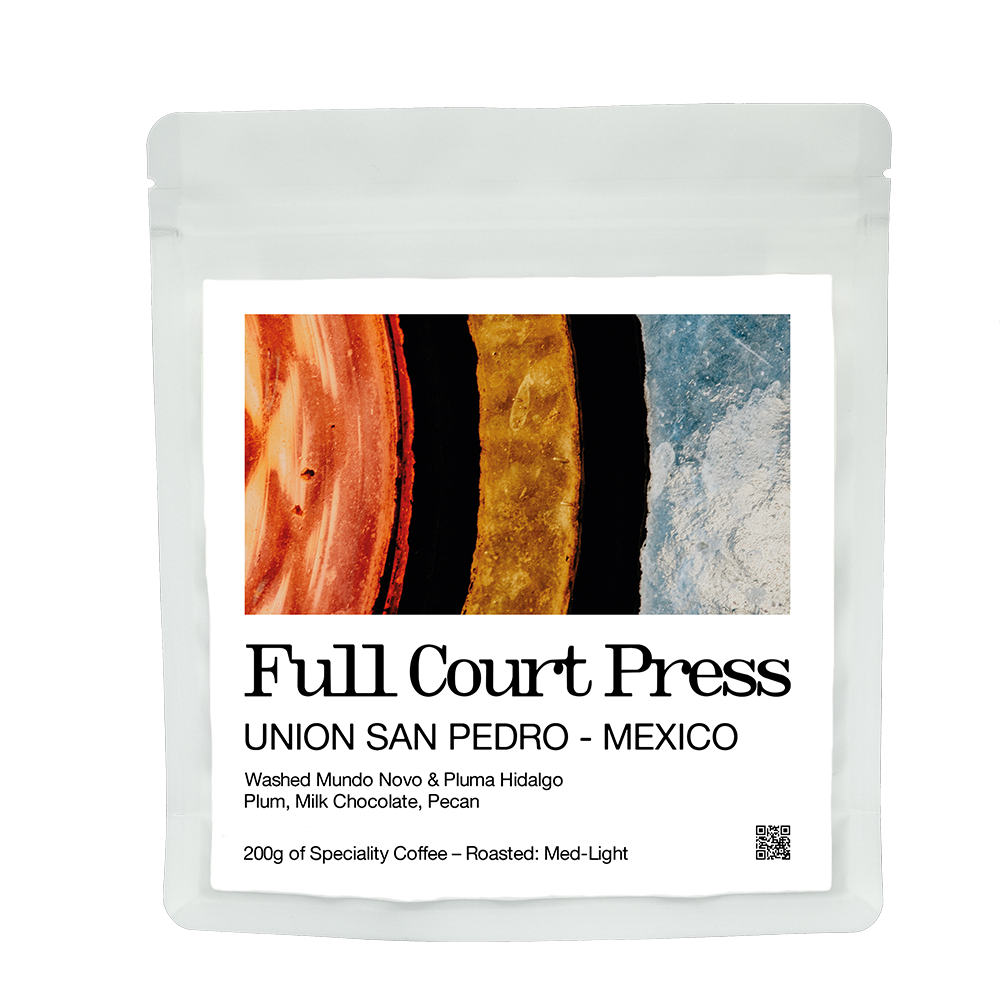
A washed Mexican filter roast with plum fruit, milk chocolate sweetness, and a pecan finish.

A decaf from Mexico made with Bourbon, Typica and Penazco grown between 1,000 and 2,050 masl. Sweet, smooth and easy-drinking, it is designed to keep plenty of flavour in the cup without the caffeine.

A chemical-free decaf currently sourced from Peru and processed using the Mountain Water method. It is selected for a smooth, sweet cup rather than the flat profile decaf can sometimes bring.
Some days call for a flat white. Others for a slower brew. It's nice to have a coffee that doesn't mind which. Sweet toffee apple, juicy blackberry and roasted almond come together in a beautifully balanced cup that's just as enjoyable with milk as it is black. The sort of coffee you'll end up buying for someone else to try.

A washed Mexican coffee from smallholder producers near Oaxaca City, grown under natural shade. Milk chocolate, pecan, and glace cherry notes make it sweet, accessible, and quietly complex.

House Red is Red Bank's everyday filter coffee, designed as a classic, familiar, crowd-pleasing cup. It keeps the profile comforting and easy to drink without chasing extremes.

A washed Mexican coffee from growers in San Mateo Yoloxochitlan in the Mazateca region. Honeysuckle, mandarin, and agave notes make it balanced, nuanced, and expressive of the region.

Last year we were lucky enough to visit Chiapas and the 58 Tseltal women who grow this coffee, hearing first hand what they experience in a male dominated industry was eye-opening. We are excited to announce we have not one but two lots from the group this year. This one is tasting sweet and syrupy, a real crowd-pleaser.

A mountain water decaf from producer communities in Frailesca, Chiapas, Mexico, made from Typica, Mundo Novo, Bourbon and Caturra. Creamy sweetness, Werther's Originals and red apple notes keep it comforting without the caffeine.
These links switch to another browse view. The matching coffees for this page are shown above.