Coffee Origin

Nicaragua Coffee Beans

Compare 13 current Nicaragua specialty coffees from independent UK roasters by process, tasting notes and price.

View 13 coffeesCopy the page link to share your filters and sort order.

Nicaragua coffees

Sorted with featured coffees first.

Showing 13 of 13 coffees

Ana Alvir
Caravan Coffee Roasters
Peach
Process Washed

We’re super excited to present two coffees of the same varietal, grown on neighbouring farms, processed two different ways and named after the sisters who grow them. Ana is the washed, and tasting it alongside Martha, the natural, is a great way to explore the difference processing makes. Both farms sit in northern Nicaragua near the Honduran border, where altitude, a cool climate and volcanic soil produce the country’s finest coffee. Ana and Martha left in the 70s, returning after inheriting their father’s farms in 2013 to open a mill and export business, with 7 staff and 60 more at harvest. Finca Las Hortensias has been in the Alvir family for over fifty years, and Ana runs it on agroforestry principles, with coffee shaded by forest, banana and fruit trees. Maracaturra, a Maragogype × Caturra cross, pairs Maragogype’s quality with better yield and rust resistance.

£14.00 / 200g£7.00/100g
Martha Alvir
Caravan Coffee Roasters
Pineapple
Process Washed

We’re super excited to present two coffees of the same varietal, grown on neighbouring farms, processed two different ways and named after the sisters who grow them. Martha is the natural, and tasting it alongside Ana, the washed, is a great way to explore the difference processing makes. Both farms sit in northern Nicaragua near the Honduran border, where altitude, a cool climate and volcanic soil produce the country’s finest coffee. Martha and Ana left in the 70s, returning after inheriting their father’s farms in 2013 to open a mill and export business, with 7 staff and 60 more at harvest. Martha has run Finca Bethania since 1991, growing coffee under forest shade with banana and fruit trees. Maracaturra, a Maragogype × Caturra cross, pairs Maragogype’s quality with better yield and rust resistance.

£14.70 / 200g£7.35/100g
Nicaragua Pineapple Candy
Hard Lines Coffee
PineappleVanillaTropical
Producer La Bastilla Estate, Matagalpa
Process Washed
Altitude 900-1000 Masl

The name says it all... Pineapple Candy! You’ve got a hefty serving of juicy pineapple drenched in sugary sweetness and a zesty, mouthwatering acidity. You can’t go wrong brewing this over ice and enjoying it on a sunny afternoon—it’s the perfect tropical pick-me-up! Situated amongst the mountains of Matagalpa, Hacienda Santa Luz has its very own microclimate, which makes it ideal for cultivating coffee. The farm was purchased as an abandoned lot in 2003, with the vision of reestablishing it as a sustainable coffee plantation. This has involved planting new and diverse coffee varieties, building an ecological processing plant and preserving 30 hectares of farm as forest. It’s a funky little brew thanks to the yeast inoculation process. Cherries are hand-picked and fermented in bins with yeast explicitly developed for coffee, which is added to control the profile. These special, washed lots have tropical-fruit-like tastes, hence the name, ‘Pineapple Candy’.

£15.00 / 250g£6.00/100g
Nicaragua: Limoncillo, Ethiosar, Natural
Hasbean
RumRaisin FudgeSultanaRed Apple
Region Matagalpa
Producer The Mierisch Family
Process Natural
Roast Medium Dark
Variety Ethiosar
Altitude 1,200 masl

Nicaragua: Finca Limoncillo, Ethiosar, Natural There's a big punch of rum and raisin fudge up front, rich and indulgent with a beautifully creamy texture. Sweet sultanas bring extra depth and sweetness through the middle of the cup, while a gentle note of red apple keeps everything balanced and bright. The coffee we have here hails from the Matagalpa region of Nicaragua, grown and processed for us by our good friends the Mierisch family. This is one of our longest continuing producer relationships, as we’ve been buying coffee from their farm, Finca Limoncillo, since 2007, and we foresee that continuing for many years yet. The third single origin coffee we’re releasing from this year’s harvest is a Natural-processed Ethiosar. On The Farm All of the Mierisch family's Nicaraguan coffee farms are spread across the Jinotega and Matagalpa regions in the northwest of the country. They’re dotted on either side of the mountain range that forms the border between the two departments. When Roland travels to visit the farms, he’ll generally see Limoncillo on the same day as La Huella and Mama Mina, as they are close to one another. The journey typically starts at Mama Mina, continues through La Huella, and finishes at Limoncillo, the largest of the three farms. Finca Limoncillo is a premium coffee farm and jewel of the Mierisch family, nestled at 1,200 metres above sea level in the lush mountains of Matagalpa, Nicaragua. Spanning 171 hectares, 109 of which are dedicated to coffee cultivation, the farm is known not only for its breathtaking landscape, with nine waterfalls crossing its terrain, but also for its role as a benchmark in Nicaraguan specialty coffee. Owned by the highly respected Mierisch family, known for their experimental processing, varietal work, and exceptional coffees, Limoncillo is home to a wide range of varietals including Caturra, Red Bourbon, Pacamara, and Java. People The very first Mierisch farm was founded in 1895 by German émigré Ernst Bruno Mierisch Boettiger. He was compensated by the Nicaraguan government for his engineering work on the construction of the Pacific railroad between Masaya and Diriamba with a parcel of land, including a goldmine and a farm he named "Sajonia" (the Spanish spelling of his home region in Germany, Saxony). In 1908 he planted his first coffee tree. Today, Fincas Mierisch operates nine coffee farms in Nicaragua and three in Honduras. More than 100 years later, the family business is run by his grandson, Dr. Erwin Mierisch Buitrago (third generation), and great-great-grandson Erwin "Wingo" Mierisch (fifth generation). Wingo has been involved with the farms since 2017, contributing to everything from post-harvest processing to roasting, cupping, and green coffee sales. His passion for innovation and research has led him to head the development of new post-harvest processing methods at the mill and refine quality control protocols to increase both quality and consistency. With Wingo’s input, the team at the Don Esteban mill have heavily invested in processing experimentation. Erick Lopez is the Head Agronomist of the Mierisch farms. He started his career at entry level 22 years ago, working in the fields. Recognising his talent and commitment, the family promoted him and funded further education, enabling him to progress into his current leadership role. He now oversees much of the day-to-day operation of the farms. The Fincas Mierisch team includes many employees who have worked with the family for years, and their expertise and dedication make the high quality of both product and service possible. The family employ more than 3,000 staff during harvest, and at Limoncillo over 60 families live on the farm full-time. They are genuinely loved by the people who work for them. More than any other producer we buy from, there is a clear sense of mutual respect and appreciation between the family and their workers. The fact that the Mierisch family are our friends allows us to see the finer details of how they care for their team, continually reinforcing our belief that good people grow good coffee. Sustainable Coffee Beans The family have numerous policies and initiatives in place to make their operations as sustainable as possible. Chemical use is kept to a minimum, and environmental impact is carefully managed through thoughtful land stewardship. In 2024, the farm completed a 15 kW hydroelectric plant, furthering its commitment to sustainability by supplying renewable energy to both farm operations and the 60 on-site families who live and work there. Alongside its coffee-growing areas, the estate also supports cattle and horses, while large sections of preserved forest help maintain biodiversity. The Mierisch family’s commitment to social responsibility is equally impressive. They provide housing, meals, childcare, education, and healthcare for workers year-round, and pay wages that exceed the local minimum by 30%. Precision Processing The Don Esteban mill, located on Finca Limoncillo, is the central processing hub for the Mierisch family’s farms in the Matagalpa region. Named in honour of the family patriarch, the mill is engineered with precision and flexibility in mind, allowing the team to adapt processing methods to suit each varietal and lot. Coffee cherries are carefully hand-picked before being depulped using state-of-the-art eco-pulpers, which significantly reduce water usage while offering precise control over the amount of mucilage left on the bean. Depending on the desired outcome, whether washed, natural, or honey processed, coffees are either fermented in tiled tanks or dried slowly on covered African-style raised beds. This approach allows for clean, traceable expressions of origin and varietal character. To read all about Natural processing, check out our article here: Naturally Processed Coffee Explained What Is Ethiosar? We’ve been roasting Ethiosar coffee from Finca Limoncillo for several years now, and it’s a varietal with a fascinating backstory rooted in innovation and resilience. It was developed through the collaborative efforts of the Mierisch family and their cousin Ricardo, who owns a nearby farm at a much lower altitude, just 800 metres above sea level. Ricardo noticed his coffee plants were struggling. Yields were dropping, and disease pressure was increasing. He attributed this to a combination of factors, including climate change, increased rainfall, and the inherent challenges of growing specialty coffee at lower altitudes in Nicaragua. Amidst these challenges, one experimental plant stood out. It was thriving, producing more fruit and showing strong resistance to disease. That plant was Ethiosar. Ethiosar is a stable hybrid varietal, carefully developed to combine exceptional cup quality with strong disease resistance. It begins with a cross between: Sudan Rume – an heirloom Ethiopian coffee variety known for its complex, floral flavours. Sarchimor – a hybrid of Villa Sarchi and Timor, bred for resilience. This hybrid is then crossed again with Villa Sarchi, a dwarf mutation of Bourbon from Costa Rica, prized for its sweetness and compact growth. The result is a varietal that is not only resilient and high-yielding, but also delivers a delicious, nuanced cup profile, making it a fantastic choice for lovers of single origin coffee and specialty Nicaraguan coffees. Traceability Country: Nicaragua Region: Matagalpa Municipality: Yasica Norte Farm: Limoncillo Producers: The Mierisch Family Farm size: 171 hectares Coffee growing area: 109 hectares Protected Rainforest: 54 hectares Varietal: Ethiosar Process: Natural Elevation: 1,200 masl Harvest Months: October-February Diurnal Temp. Cycle: Avg High 25C, Low 17C Awards: Cup of Excellence 2008 (2nd Place) Cupping Scores Cupping Notes: Rum & raisin fudge, sultana, red apple. Cup of Excellence Cupping Scores Clean Cup: 6/8 Sweetness: 6.5/8 Acidity: 6.5/8 Mouthfeel: 7/8 Flavour: 6.5/8 Aftertaste: 6.5/8 Balance: 6/8 Overall: 6.5/8 Correction: +36 Total: 87/100 If you'd like to find out more about how we score coffees, make sure to read our blog post “What Do Coffee Cupping Scores Actually Mean?” and if you'd like to try cupping yourself, we've got a guide to that too! What is Coffee Cupping. Roasting Information Medium-dark - fudgy, and deliberately so. Steady through first crack, good consistent pace into the gap between the cracks, then off the heat just before second. That steadiness is where the body and the creamy pecan finish come from. The early drop is what saves the yellow plum acidity from disappearing under all that richness. Rich and lively at once, which is a harder balance than it sounds. Recommended Resting Time Our coffee is roasted fresh and ships quickly – which means it might arrive a little lively. Freshly roasted beans are still busy releasing carbon dioxide (a natural byproduct of roasting), and all that activity can make your brew taste a bit sharp or unsettled. Give it a few days to calm down and something lovely happens. Those brighter, edgier notes mellow out, sweetness develops, and the flavours you're actually after can really come into focus. We recommend resting your coffee for at least 5-7 days from the roast date on the bag before brewing. A little patience goes a long way. That said, this is just what we've found works best – not a rule. If you can't wait, we completely understand. Tuck in whenever you like.

£11.95 / 220g£5.43/100g
Nicaragua | El Diablo
Hundred House Coffee
StrawberryBlack GrapeBlueberry
Region Jinotega
Process Natural
Variety Catuai
Altitude 1,100 - 1,400 MASL

REGION : Jinotega ALTITUDE : 1,100 - 1,400 MASL VARIETAL : Catuai PROCESS : Natural FLAVOUR NOTES : Strawberry, , Black Grape, Blueberry The Cerro Datanlí - El Diablo Nature Reserve is a high massif rising between Matagalpa and Jinotega, part of Nicaragua’s Isabelia mountain range. It is a magical landscape, where birds and butterflies move through lush cloud forest and coffee trees cling to impossibly steep, shaded mountainsides. Datanlí is an indigenous word meaning “where water falls”, a fitting name for one of Jinotega’s richest and most diverse ecosystems. Water sources originate high in the mountains before flowing down through the reserve to the coffee farms below. Combined with favourable climatic conditions, fertile land and generations of agricultural knowledge, this abundant water helps create exceptional conditions for specialty coffee production. Coffee is the primary source of income for the farmers of the El Diablo community, many of whom manage medium-sized farms alongside crops grown for their own consumption. Catuai and Caturra remain the principal coffee varieties, while producers are increasingly planting Pacamara and hybrid varieties such as Catimor to bring greater diversity to their farms. The region has gradually shifted from large-scale commercial coffee towards specialty production, building on agricultural systems already well adapted to its particular landscape and climate. Today, producers combine careful processing with environmentally conscious practices, including wastewater treatment, using coffee pulp as fertiliser and planting living barriers and windbreaks around their farms. The result is a distinctive expression of this remarkable landscape, with notes of chocolate and red fruit, a medium body and bright malic acidity.

£13.00 / 227g£5.73/100g
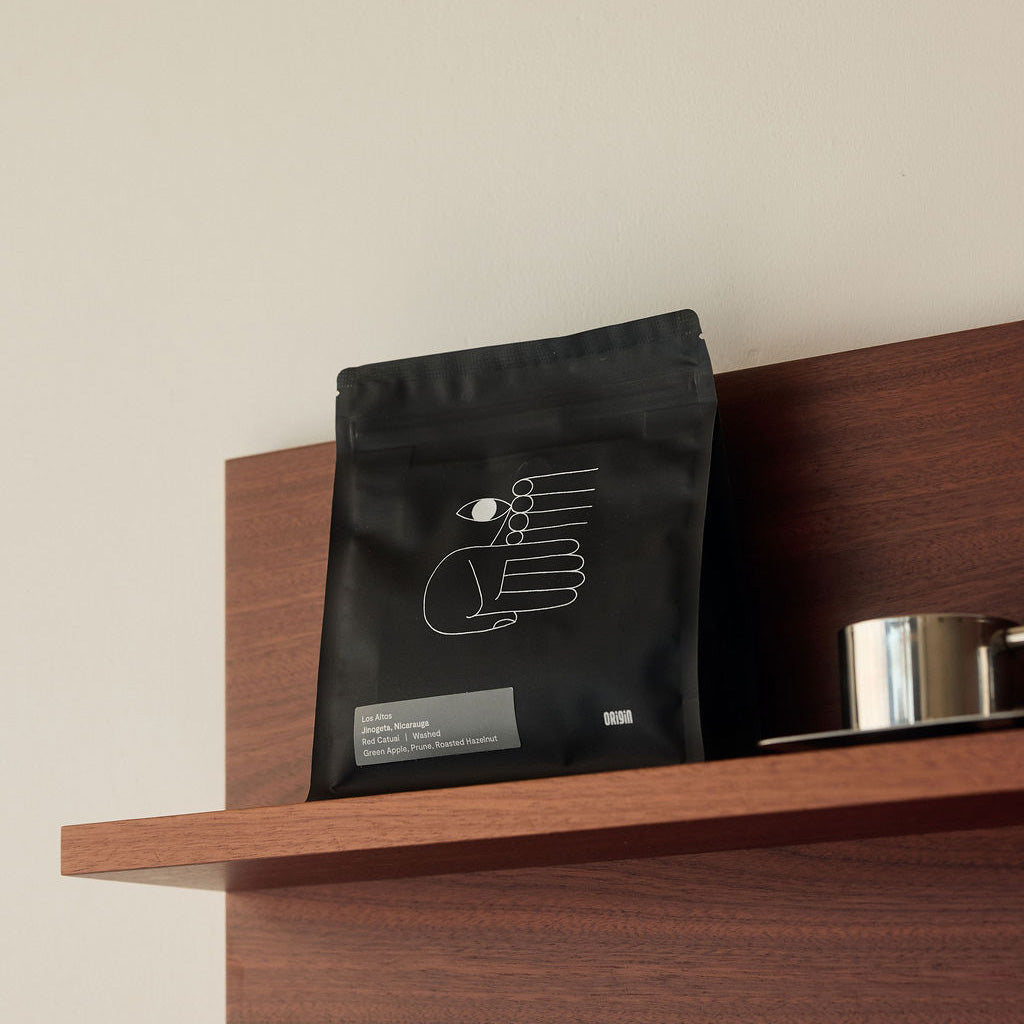
Los Altos
Origin Coffee Roasters
Green ApplePruneRoasted Hazelnut
Region Jinotega
Producer The Mierisch Family
Process Washed
Variety Red Catuai
Altitude 1,275 - 1,400 masl

A washed Red Catuai from the Mierisch family in Jinotega, Nicaragua. Green apple, prune and roasted hazelnut notes make Los Altos smooth, sweet and approachable.

£12.50 / 250g£5.00/100g
Nicaragua: Limoncillo, Ethiosar, Natural
Ozone Coffee
RumRaisin FudgeSultanaRed Apple
Region Matagalpa
Producer The Mierisch Family
Process Natural
Roast Medium Dark
Variety Ethiosar
Altitude 1,200 masl

Nicaragua: Finca Limoncillo, Ethiosar, Natural There's a big punch of rum and raisin fudge up front, rich and indulgent with a beautifully creamy texture. Sweet sultanas bring extra depth and sweetness through the middle of the cup, while a gentle note of red apple keeps everything balanced and bright. The coffee we have here hails from the Matagalpa region of Nicaragua, grown and processed for us by our good friends the Mierisch family. This is one of our longest continuing producer relationships, as we’ve been buying coffee from their farm, Finca Limoncillo, since 2007, and we foresee that continuing for many years yet. The third single origin coffee we’re releasing from this year’s harvest is a Natural-processed Ethiosar. On The Farm All of the Mierisch family's Nicaraguan coffee farms are spread across the Jinotega and Matagalpa regions in the northwest of the country. They’re dotted on either side of the mountain range that forms the border between the two departments. When Roland travels to visit the farms, he’ll generally see Limoncillo on the same day as La Huella and Mama Mina, as they are close to one another. The journey typically starts at Mama Mina, continues through La Huella, and finishes at Limoncillo, the largest of the three farms. Finca Limoncillo is a premium coffee farm and jewel of the Mierisch family, nestled at 1,200 metres above sea level in the lush mountains of Matagalpa, Nicaragua. Spanning 171 hectares, 109 of which are dedicated to coffee cultivation, the farm is known not only for its breathtaking landscape, with nine waterfalls crossing its terrain, but also for its role as a benchmark in Nicaraguan specialty coffee. Owned by the highly respected Mierisch family, known for their experimental processing, varietal work, and exceptional coffees, Limoncillo is home to a wide range of varietals including Caturra, Red Bourbon, Pacamara, and Java. People The very first Mierisch farm was founded in 1895 by German émigré Ernst Bruno Mierisch Boettiger. He was compensated by the Nicaraguan government for his engineering work on the construction of the Pacific railroad between Masaya and Diriamba with a parcel of land, including a goldmine and a farm he named "Sajonia" (the Spanish spelling of his home region in Germany, Saxony). In 1908 he planted his first coffee tree. Today, Fincas Mierisch operates nine coffee farms in Nicaragua and three in Honduras. More than 100 years later, the family business is run by his grandson, Dr. Erwin Mierisch Buitrago (third generation), and great-great-grandson Erwin "Wingo" Mierisch (fifth generation). Wingo has been involved with the farms since 2017, contributing to everything from post-harvest processing to roasting, cupping, and green coffee sales. His passion for innovation and research has led him to head the development of new post-harvest processing methods at the mill and refine quality control protocols to increase both quality and consistency. With Wingo’s input, the team at the Don Esteban mill have heavily invested in processing experimentation. Erick Lopez is the Head Agronomist of the Mierisch farms. He started his career at entry level 22 years ago, working in the fields. Recognising his talent and commitment, the family promoted him and funded further education, enabling him to progress into his current leadership role. He now oversees much of the day-to-day operation of the farms. The Fincas Mierisch team includes many employees who have worked with the family for years, and their expertise and dedication make the high quality of both product and service possible. The family employ more than 3,000 staff during harvest, and at Limoncillo over 60 families live on the farm full-time. They are genuinely loved by the people who work for them. More than any other producer we buy from, there is a clear sense of mutual respect and appreciation between the family and their workers. The fact that the Mierisch family are our friends allows us to see the finer details of how they care for their team, continually reinforcing our belief that good people grow good coffee. Sustainable Coffee Beans The family have numerous policies and initiatives in place to make their operations as sustainable as possible. Chemical use is kept to a minimum, and environmental impact is carefully managed through thoughtful land stewardship. In 2024, the farm completed a 15 kW hydroelectric plant, furthering its commitment to sustainability by supplying renewable energy to both farm operations and the 60 on-site families who live and work there. Alongside its coffee-growing areas, the estate also supports cattle and horses, while large sections of preserved forest help maintain biodiversity. The Mierisch family’s commitment to social responsibility is equally impressive. They provide housing, meals, childcare, education, and healthcare for workers year-round, and pay wages that exceed the local minimum by 30%. Precision Processing The Don Esteban mill, located on Finca Limoncillo, is the central processing hub for the Mierisch family’s farms in the Matagalpa region. Named in honour of the family patriarch, the mill is engineered with precision and flexibility in mind, allowing the team to adapt processing methods to suit each varietal and lot. Coffee cherries are carefully hand-picked before being depulped using state-of-the-art eco-pulpers, which significantly reduce water usage while offering precise control over the amount of mucilage left on the bean. Depending on the desired outcome, whether washed, natural, or honey processed, coffees are either fermented in tiled tanks or dried slowly on covered African-style raised beds. This approach allows for clean, traceable expressions of origin and varietal character. To read all about Natural processing, check out our article here: Naturally Processed Coffee Explained What Is Ethiosar? We’ve been roasting Ethiosar coffee from Finca Limoncillo for several years now, and it’s a varietal with a fascinating backstory rooted in innovation and resilience. It was developed through the collaborative efforts of the Mierisch family and their cousin Ricardo, who owns a nearby farm at a much lower altitude, just 800 metres above sea level. Ricardo noticed his coffee plants were struggling. Yields were dropping, and disease pressure was increasing. He attributed this to a combination of factors, including climate change, increased rainfall, and the inherent challenges of growing specialty coffee at lower altitudes in Nicaragua. Amidst these challenges, one experimental plant stood out. It was thriving, producing more fruit and showing strong resistance to disease. That plant was Ethiosar. Ethiosar is a stable hybrid varietal, carefully developed to combine exceptional cup quality with strong disease resistance. It begins with a cross between: Sudan Rume – an heirloom Ethiopian coffee variety known for its complex, floral flavours. Sarchimor – a hybrid of Villa Sarchi and Timor, bred for resilience. This hybrid is then crossed again with Villa Sarchi, a dwarf mutation of Bourbon from Costa Rica, prized for its sweetness and compact growth. The result is a varietal that is not only resilient and high-yielding, but also delivers a delicious, nuanced cup profile, making it a fantastic choice for lovers of single origin coffee and specialty Nicaraguan coffees. Traceability Country: Nicaragua Region: Matagalpa Municipality: Yasica Norte Farm: Limoncillo Producers: The Mierisch Family Farm size: 171 hectares Coffee growing area: 109 hectares Protected Rainforest: 54 hectares Varietal: Ethiosar Process: Natural Elevation: 1,200 masl Harvest Months: October-February Diurnal Temp. Cycle: Avg High 25C, Low 17C Awards: Cup of Excellence 2008 (2nd Place) Cupping Scores Cupping Notes: Rum & raisin fudge, sultana, red apple. Cup of Excellence Cupping Scores Clean Cup: 6/8 Sweetness: 6.5/8 Acidity: 6.5/8 Mouthfeel: 7/8 Flavour: 6.5/8 Aftertaste: 6.5/8 Balance: 6/8 Overall: 6.5/8 Correction: +36 Total: 87/100 If you'd like to find out more about how we score coffees, make sure to read our blog post “What Do Coffee Cupping Scores Actually Mean?” and if you'd like to try cupping yourself, we've got a guide to that too! What is Coffee Cupping. Roasting Information Medium-dark - fudgy, and deliberately so. Steady through first crack, good consistent pace into the gap between the cracks, then off the heat just before second. That steadiness is where the body and the creamy pecan finish come from. The early drop is what saves the yellow plum acidity from disappearing under all that richness. Rich and lively at once, which is a harder balance than it sounds. Recommended Resting Time Our coffee is roasted fresh and ships quickly – which means it might arrive a little lively. Freshly roasted beans are still busy releasing carbon dioxide (a natural byproduct of roasting), and all that activity can make your brew taste a bit sharp or unsettled. Give it a few days to calm down and something lovely happens. Those brighter, edgier notes mellow out, sweetness develops, and the flavours you're actually after can really come into focus. We recommend resting your coffee for at least 5-7 days from the roast date on the bag before brewing. A little patience goes a long way. That said, this is just what we've found works best – not a rule. If you can't wait, we completely understand. Tuck in whenever you like.

£11.95 / 220g£5.43/100g
Nicaragua Finca Bethania Natural
Skylark Coffee
Chocolate Covered StrawberriesVelvety
Process Natural
Variety Catuai
Altitude 1200-1500 Metres Above Sea Level

This velvety quaff comes from Finca Bethania, a coffee agroforestry farm run by sisters Martha and Ana in the heart of Nicaragua. We're big fans of chocolately fruity coffees around here and also love to support women producers, so this lot was a no-brainer for us. It seriously tastes like chocolate-covered strawberries and we want to drink it every day. Finca Bethania has been managed by sisters Martha and Ana since 2013, when they inherited the farm from their father. At the time, the farm was mostly planted with Catimor, chosen for its high yields. The sisters shifted the focus toward quality and gradually replanted with varieties like Catuai, Parainema, Maracaturra, Gesha, and Java. It's now a 60-hectare farm with a 10-hectare forest reserve. The remaining 50 hectares are planted with a variety of crops, including coffee, guava, bucar, plantain, banana, and citrus. In addition to their farms, Martha and Ana Albir founded Cafetos de Segovia in 2015, a coffee exporter and mill based in Ocotal, Nueva Segovia, their hometown. The sisters had fled Nicaragua during the civil war in 1977 and settled abroad, but they never forgot their homeland. In 2013, their father passed down his two coffee farms to them: Bethania and Hortensias. Soon after, they decided to open a processing center and start an export business to bring their coffee to market, and that’s how Cafetos de Segovia was born. Today, the mill employs seven full-time local staff and up to 60 seasonal workers during the harvest. The business gives the sisters a meaningful reason to return to Nicaragua each year — to reconnect with their family, enjoy their culture, grow their own coffee, and support better economic opportunities for coffee growers in their region. This lot was picked, floated, let to ferment anaerobically for 48 hours, and dried slowly on raised beds for three to four weeks. Elevation: 1200-1500 Metres Above Sea Level Varietal: Catuai Cup Score: 87 Price paid per kg: £11.90 Process: Natural

£13.00 / 250g£5.20/100g
Bethania Javanica, Nicaragua
Yallah Coffee
Cherry LiquorDark Chocolate
Producer Ana & Martha Lucía Albir
Variety Javanica

This vibrant but complex coffee is from the Albir sisters own farm, Finca Bethania. This lot is one of our favourites from this year’s harvest; expect boozy cherry liquor, rich and indulgent dark chocolate, all balanced by a strawberry-like acidity. We are delighted to see this exceptional coffee return for another year.

£15.00 / 250g£6.00/100g
House Espresso, Nicaragua
Yallah Coffee
ToffeeHazelnutChocolate
Producer Cafetos Communities
Process Washed
Variety Bourbon, Catuai, Caturra

We’re excited to welcome back this wonderful coffee to the range, hailing from our favourite corner of Nicaragua, from our favourite sisters with our favourite profile. We are especially proud of the seventh year partnership we have with Martha and the team at Cafetos, and are as excited as ever to see their coffees return.

£12.00 / 250g£4.80/100g
Trust, Nicaragua
Yallah Coffee
Milk ChocolateMarzipanToffee
Producer Marcos Florian, El Recuerdo
Process Washed
Variety Red Catuai

High in the Nicaraguan mountains, near the Honduran border, you'll find Finca El Recuerdo. It's a hidden gem, with lush jungle and loud birdsong that fills the air. Here, you’ll find Marcos and his family tending to their crop. It’s a special place to be.

£14.00 / 250g£5.60/100g

Explore related browse pages

These links switch to another browse view. The matching coffees for this page are shown above.